
Achilles Pain Orthopedic Physical Therapy
Achilles pain can cause stiffness, aching, burning, tenderness, swelling, or weakness along the tendon that connects the calf to the heel. These symptoms may make it difficult to walk, stand, climb stairs, run, jump, exercise, play sports, or move comfortably after rest. Physical therapy for Achilles pain may help identify contributing factors, reduce irritation, improve ankle mobility, rebuild tendon strength, and support a safer return to daily activity.
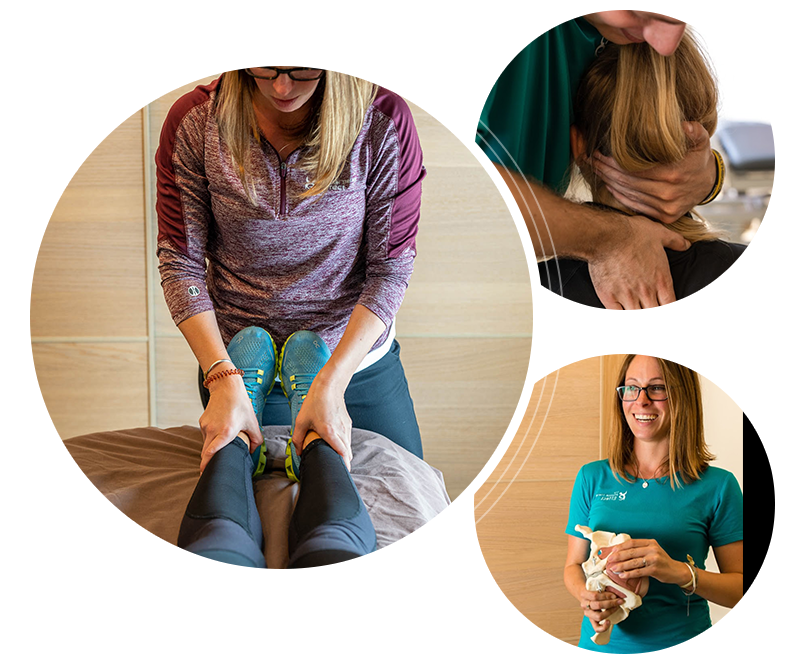
Physical Therapy for Achilles Pain
Achilles pain is discomfort involving the strong tendon that connects the calf muscles to the heel bone. The Achilles tendon helps lift the heel, push the body forward, control the ankle when the foot contacts the ground, and transfer force during walking, running, jumping, and climbing stairs. Symptoms may include morning stiffness, tenderness, swelling, thickening, weakness, or pain during and after activity.
Physical therapy for Achilles pain is not one-size-fits-all. The right treatment plan depends on where the tendon hurts, how long symptoms have been present, ankle mobility, calf strength, tendon load tolerance, foot mechanics, footwear, training history, work demands, sport demands, and personal goals. A physical therapy evaluation can help determine whether symptoms may be influenced by Achilles tendinopathy, insertional irritation, a recent strain, reduced ankle mobility, calf weakness, rapid training changes, or another contributing factor.
What is Achilles Pain?
Achilles pain refers to discomfort anywhere along the tendon between the calf and the heel. Some people feel pain several centimeters above the heel, while others notice symptoms directly where the tendon attaches to the heel bone. Pain may develop gradually over time or begin after a sudden increase in running, jumping, walking, or other activity.
Achilles pain may feel stiff and sore during the first steps in the morning, improve as the body warms up, and return later during or after activity. Other people notice persistent tenderness, swelling, weakness, or difficulty pushing off the foot. Because heel pain, calf injuries, ankle problems, and nerve symptoms can sometimes feel similar, a careful evaluation can help identify the most likely source.
What causes Achilles Pain?
Achilles pain often develops when the tendon is exposed to more load than it can currently tolerate. This may happen after increasing running mileage, adding hills or speed work, returning to exercise after time away, changing footwear, beginning a new sport, working long hours on the feet, or repeatedly jumping and pushing off.
Contributing factors may include limited ankle dorsiflexion, calf weakness, reduced tendon capacity, changes in foot or ankle mechanics, poor balance, inadequate recovery, training errors, stiff footwear, sudden changes in surface, or reduced hip and leg strength. A physical therapy evaluation can help identify which factors appear most relevant to your symptoms.
Get Answers About Achilles Pain
Common symptoms of Achilles Pain
Achilles pain can vary depending on the location of tendon irritation, the stage of the condition, recent activity, and how the ankle, calf, foot, and rest of the leg handle load. Symptoms may be mild and activity-dependent or may interfere with normal walking and standing.
Achilles stiffness and pain during the first steps
Morning stiffness and pain during the first few steps after getting out of bed are common with Achilles tendon irritation. Similar symptoms may occur after sitting for a long period, driving, or resting after exercise.
This pattern may be influenced by tendon sensitivity, reduced ankle mobility, calf tightness, swelling, or a temporary reduction in the tendon’s ability to tolerate load. Symptoms may ease after moving for several minutes but return later in the day.
Common signs of Achilles stiffness after rest
- Pain or stiffness during the first steps in the morning
- Tightness after sitting, driving, or resting
- Symptoms that improve after warming up
- Tenderness or thickening along the tendon
- Pain that returns after prolonged walking or exercise
How physical therapy may help Achilles stiffness
Physical therapy may help improve ankle mobility, gradually restore calf flexibility, reduce unnecessary irritation, and introduce progressive tendon-loading exercises. Your therapist can also help you manage activity levels while rebuilding the tendon’s ability to tolerate walking, stairs, and exercise.
Pain in the middle portion of the Achilles tendon
Midportion Achilles pain is usually felt several centimeters above the heel. The tendon may feel sore, thickened, sensitive to touch, or painful during running, jumping, climbing stairs, or repeated heel raises.
This symptom pattern is often associated with Achilles tendinopathy, in which the tendon becomes sensitive after repeated or excessive loading. Symptoms may be influenced by training volume, calf weakness, ankle stiffness, reduced recovery, or sudden changes in activity.
Common signs of midportion Achilles pain
- Pain or tenderness above the heel
- Thickening or swelling in the middle of the tendon
- Pain with running, jumping, or heel raises
- Stiffness at the start of activity
- Symptoms that increase after higher-load exercise
How physical therapy may help midportion Achilles pain
Physical therapy may use progressive calf and Achilles loading, ankle mobility work, balance training, movement assessment, and gradual activity progression. The goal is to improve tendon capacity rather than simply resting indefinitely, while adjusting exercises to your current level of sensitivity.
Schedule Physical Therapy for Achilles Pain
Pain where the Achilles attaches to the heel
Insertional Achilles pain is felt at the lower end of the tendon where it attaches to the heel bone. Symptoms may increase with uphill walking, stairs, running, deep ankle bending, rigid shoe backs, or standing after rest.
The insertion can become sensitive to both tension and compression. Treatment often needs to account for how far the ankle is moved during exercises, the type of footwear being used, and the amount of walking, running, or jumping performed each day.
Common signs of insertional Achilles pain
- Tenderness directly at the back of the heel
- Pain from shoes rubbing against the tendon
- Discomfort with hills, stairs, or deep ankle bending
- Swelling or a noticeable bump near the heel
- Morning stiffness that improves with movement
How physical therapy may help insertional Achilles pain
Physical therapy may include carefully selected calf-strengthening exercises, activity modification, ankle mobility work within a comfortable range, footwear guidance, and gradual return to hills, stairs, running, or sport. Your therapist can adjust loading so the tendon becomes stronger without repeatedly compressing the sensitive attachment.
Achilles pain with running, jumping, or sports
Achilles symptoms often become more noticeable during activities that require repeated push-off, acceleration, deceleration, jumping, or changes of direction. Pain may occur at the beginning of activity, improve after warming up, and then increase again afterward.
This pattern may be related to reduced tendon capacity, calf weakness, limited ankle mobility, changes in running mechanics, rapid increases in training volume, inadequate recovery, or a return to sport before the tendon is ready for high-speed loading.
Common signs of activity-related Achilles pain
- Pain during or after running and jumping
- Reduced push-off strength or speed
- Symptoms with sprinting, hills, or cutting movements
- Pain that increases after training volume changes
- Difficulty returning to sport at full intensity
How physical therapy may help activity-related Achilles pain
Physical therapy may focus on calf strength, tendon endurance, ankle mobility, single-leg control, running or landing mechanics, plyometric progression, and sport-specific loading. Your therapist can help build a staged return-to-running or return-to-sport plan based on symptoms and performance.
Get Help With Achilles Pain During Activity
Related conditions and symptoms physical therapy may address
Achilles pain can overlap with several tendon, calf, heel, ankle, and movement-related problems. A physical therapy evaluation can help determine whether symptoms appear related to the tendon itself, the attachment at the heel, calf strength, ankle mobility, training load, footwear, or another contributing factor.
Midportion Achilles tendinopathy
Midportion Achilles tendinopathy typically causes pain, stiffness, tenderness, or thickening in the tendon above the heel. Symptoms often increase with running, jumping, stairs, and repeated heel raises.
Physical therapy may use progressive resistance, tendon-loading exercises, ankle mobility work, and gradual return to impact activity to improve tendon capacity and function.
Insertional Achilles tendinopathy
Insertional Achilles tendinopathy affects the point where the tendon attaches to the heel. It may cause pain with shoe pressure, hills, stairs, deep ankle bending, and the first steps after rest.
Physical therapy may modify compressive positions, guide appropriate calf strengthening, address ankle and foot mechanics, and help manage footwear and activity demands.
Achilles tendon strain or partial injury
A sudden overload may strain the Achilles tendon and cause sharp pain, swelling, weakness, or difficulty pushing off. More significant injuries require timely medical assessment to determine the extent of damage.
When appropriate, physical therapy may support protected movement, progressive strengthening, gait recovery, balance, and a gradual return to activity based on healing and medical guidance.
Calf weakness and reduced push-off strength
Calf weakness can reduce the ability to lift the heel, propel the body forward, absorb force, and tolerate running or jumping. Weakness may develop after pain, immobilization, surgery, or reduced activity.
Physical therapy may include progressive calf strengthening in different knee positions, single-leg heel raises, balance work, and functional exercises that restore push-off strength.
Heel pain and retrocalcaneal irritation
Pain near the back of the heel may involve the Achilles insertion, nearby bursa, shoe pressure, or irritation from repeated ankle motion. Symptoms can overlap and should be evaluated carefully.
Physical therapy may help identify aggravating positions, improve lower-leg strength and mobility, adjust loading, and provide footwear or activity recommendations.
Post-operative Achilles rehabilitation
Rehabilitation may be needed after Achilles tendon repair or another procedure involving the ankle and heel. Recovery depends on the procedure, surgeon protocol, healing timeline, strength, mobility, and activity goals.
Physical therapy may help restore gait, ankle mobility, calf strength, balance, tendon capacity, running ability, and return-to-sport performance while following medical precautions.
Start Treatment for Achilles Pain
Can physical therapy help Achilles Pain?
Physical therapy can often help Achilles pain by addressing tendon load tolerance, calf weakness, ankle mobility limitations, balance, foot and ankle mechanics, training errors, and activity demands that may contribute to symptoms. Treatment may help reduce irritation, restore confidence, and improve walking, running, jumping, and sport participation.
The treatment plan should match the stage and location of your symptoms. Some patients need temporary activity modification and gentle loading first, while others are ready for heavier calf strengthening, plyometric exercises, running progressions, or sport-specific training.
What your physical therapist may evaluate
- Location, duration, and behavior of Achilles symptoms
- Ankle range of motion and calf flexibility
- Calf strength, heel-raise endurance, and push-off power
- Tendon tenderness, swelling, thickening, and load response
- Foot mechanics, balance, and single-leg control
- Walking, running, jumping, landing, and stair mechanics
- Footwear, training volume, surfaces, and recent activity changes
- Work demands, sport goals, exercise routine, and medical history
What treatment may include
Treatment for Achilles pain may include progressive calf and tendon strengthening, ankle mobility exercises, balance and single-leg training, manual therapy when appropriate, gait or running assessment, footwear guidance, activity modification, plyometric progression, sport-specific exercises, and a home exercise program.
The goal is to improve tendon capacity, restore ankle and calf function, reduce repeated irritation, and help you return to walking, work, exercise, running, jumping, and sports with greater confidence.
Find Out If Physical Therapy Can Help
When should I see a physical therapist?
You may want to see a physical therapist if Achilles pain or stiffness is not improving, keeps returning, affects your walking or work, or limits your ability to climb stairs, run, jump, exercise, or play sports. Symptoms do not need to be severe before getting help.
Early guidance can help you understand how much activity the tendon can currently tolerate, which movements may need temporary modification, and how to begin rebuilding strength safely.
You may benefit from physical therapy if:
- You have Achilles stiffness during the first steps in the morning
- You feel pain or tenderness above the heel or at the tendon attachment
- Your symptoms increase with walking, stairs, running, or jumping
- You notice swelling, thickening, or reduced calf strength
- Your pain improves temporarily but keeps returning
- You recently increased training volume, speed, hills, or sport activity
- You are recovering from an Achilles injury or surgery
- You want a clear plan for strengthening and returning to activity
When to seek medical care sooner
Seek medical care promptly if you felt or heard a sudden pop, cannot push off the foot, cannot stand on your toes, develop rapid swelling or bruising, notice a visible gap in the tendon, or have severe pain after an injury. These symptoms may indicate an Achilles rupture or another significant injury. Seek urgent care for marked calf swelling, redness, warmth, chest pain, or shortness of breath because these can be signs of a blood clot or other medical emergency.
If you are unsure where to start, call us. We can help you decide whether physical therapy is an appropriate next step or whether medical evaluation may be needed first.
Schedule an Achilles Pain Evaluation
Do I need a doctor referral first?
Often, no. Many patients can begin physical therapy without seeing a doctor first, although requirements may depend on your insurance plan, symptoms, and state rules.
If symptoms began with a sudden pop, major loss of strength, inability to walk or push off, significant swelling, or concern for an Achilles rupture, medical evaluation may be recommended first. The easiest way to know is to call us. We can help you understand whether your insurance requires a referral and what steps are needed to schedule an appointment.
Ask About Scheduling Physical Therapy
Why Choose PT Effect for Treatment?
Choosing the right physical therapy office can make a major difference in how supported, understood, and confident you feel during recovery. At PT Effect, treatment is built around personalized care, hands-on attention, and a plan that helps you move better with less pain.
- You get one-on-one care with a Licensed Doctor of Physical Therapy. Every session is focused on you, your symptoms, and your goals. This allows your therapist to give you more attention, adjust your plan as you improve, and help you understand what is happening with your body.
- You get a treatment plan made for your specific problem. Your Achilles pain, tendon location, ankle mobility, calf strength, walking demands, running goals, sport needs, footwear, exercise routine, and lifestyle are all part of the plan. Instead of a generic exercise routine, your care is based on what you need to return to daily activities, work, exercise, or sports.
- You get hands-on care that helps identify how your body is moving. PT Effect uses manual therapy and detailed movement assessment to better understand stiffness, tension, mobility limits, weakness, and pain triggers. This helps your therapist treat the source of the problem instead of only chasing symptoms.
- You get help sooner, without waiting weeks to start care. Achilles pain can interrupt walking, standing, running, work, and sports quickly. PT Effect works to schedule patients as quickly as possible so you can begin moving toward recovery.
- You get support for both pain relief and long-term movement goals. Treatment is not just about feeling better for the day. Your therapist can help you build strength, mobility, speed tolerance, endurance, control, and confidence so you can move more comfortably and reduce the chance of the problem coming back.
- You get care in a modern, well-equipped physical therapy office. PT Effect’s offices are designed to support effective treatment, exercise, strengthening, mobility work, and hands-on therapy. The goal is to give you the space, tools, and guidance needed to make meaningful progress.
- You get a team that treats the way you move, not just where you hurt. Achilles pain may be influenced by ankle mobility, calf strength, tendon capacity, foot mechanics, balance, footwear, running mechanics, training volume, recovery, or previous injury. Your therapist can look at the full picture and help address the factors contributing to your symptoms.
- You get clear guidance for what to do between visits. Recovery does not only happen in the clinic. Your therapist can give you practical home exercises, activity modifications, running guidance, lifting strategies, and movement progressions so you know how to keep improving outside of your appointments.
- You get help understanding your scheduling and insurance options. PT Effect makes it easy to request an appointment, ask for more information, or have the team check your insurance. This helps remove guesswork and gives you a clearer next step.
- You get two convenient locations. PT Effect serves patients in both San Diego and San Marcos, so you can choose the office that works best for your routine.
Start Treatment With PT Effect
Achilles pain can make everyday movement difficult, especially when stiffness, tenderness, weakness, or tendon sensitivity interfere with walking, standing, climbing stairs, running, jumping, work, exercise, or sports. PT Effect can help you better understand what may be contributing to your symptoms and create a treatment plan focused on reducing irritation, restoring ankle mobility, rebuilding calf and tendon strength, and helping you return to activity with more confidence.